
Message from the Project Director
Norihiro Kokudo, MD, PhD, FACS, FRCS
Project Director of the Infectious disease Clinical Research netwOrk With National repository (iCROWN)
and President of the Japan Institute for Health Security
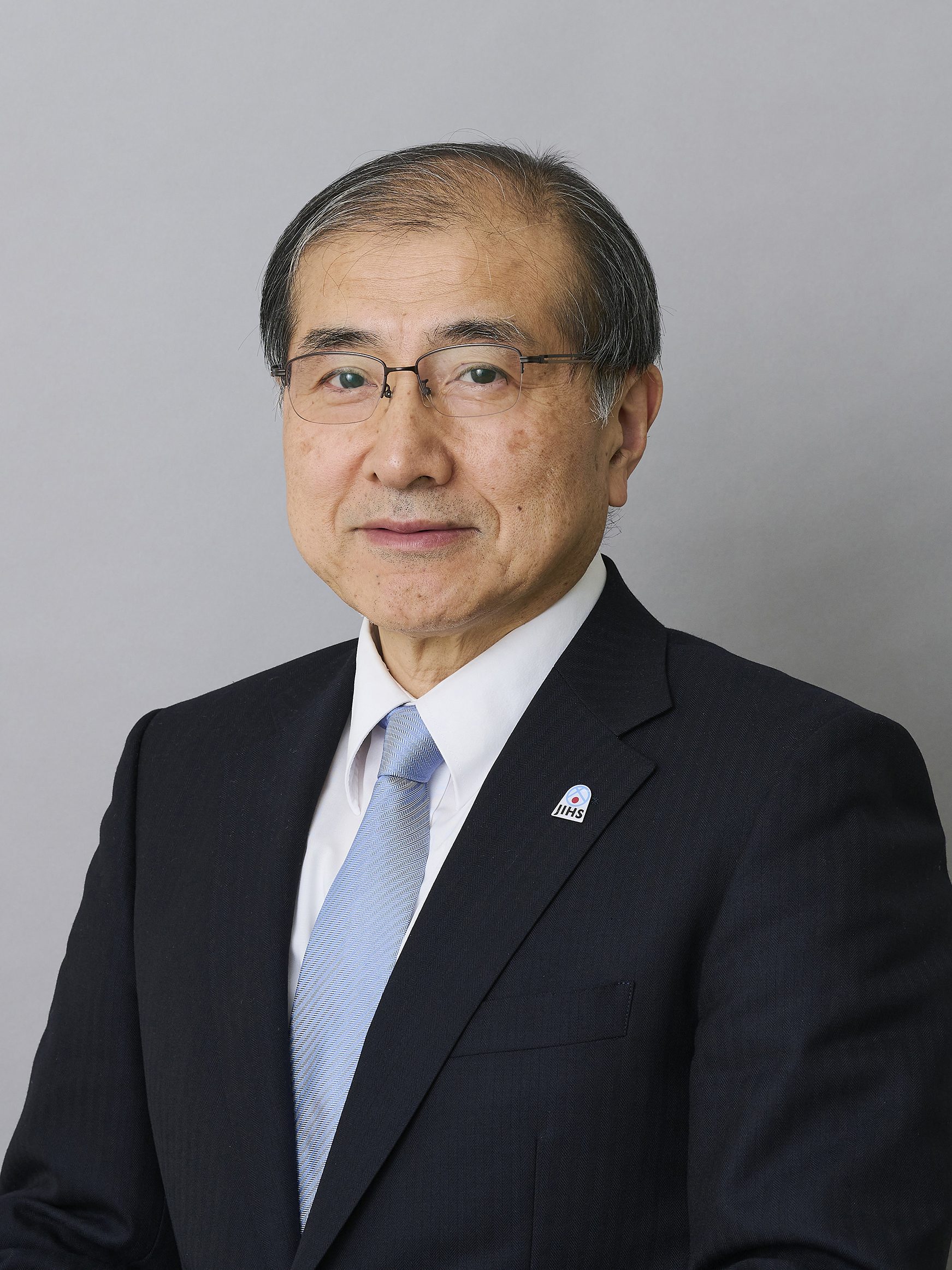
On April 1st of this year, the National Institute of Infectious Diseases and the National Center for Global Health and Medicine merged to form the Japan Institute for Health Security (JIHS). JIHS’s mission is to contribute to the realization of a safe society through the implementation of surveys and research on infectious diseases and various other diseases, as well as the provision of medical care. To achieve this, it engages in collecting and analyzing infectious disease information, serving as a network hub for activities such as R&D infrastructure and clinical research, advanced medical care that can address all pathological conditions, human resource development and international collaboration.
The Infectious disease Clinical Research netwOrk With National repository (iCROWN) project is positioned as one of the key initiatives that enables JIHS to fulfill its role as a network hub for activities such as R&D infrastructure and clinical research. In collaboration with medical institutions and local governments, the project rapidly collects clinical information and specimens to enable Japanese government to swiftly implement evidence-based countermeasures against newly emerging infectious diseases.
Furthermore, we will utilize the accumulated data to develop a repository to support the R&D of testing methods, therapeutic drugs, vaccines, and more, while also working to establish a stable management system for the repository.
With support from national and local governments, this pioneering initiative will see Designated Medical Institutions for Infectious Diseases and other organizations collaborate and integrate the repository and clinical research functions to promote a wide range of research, from the creation of scientific knowledge to the practical application of pharmaceuticals. While there are many challenges to overcome, we are confident that by gaining the understanding of medical institutions and local governments, we can maximize each party’s strengths and work together to find solutions that will lead to the establishment of a clinical research system for infectious diseases.
The advancement of this project relies on the understanding and cooperation of everyone involved, from patients who provide specimens to clinical research coordinators, clinical laboratory technicians, doctors, nurses, researchers, and other medical institution personnel, as well as the local governments that support said institutions.
We sincerely appreciate your continued understanding and support.
Background
During the early stages of the Coronavirus disease 2019 (COVID-19), the response in Japan was primarily centered around Designated Medical Institutions for Infectious Diseases that provided inpatient care for patients with Class I and Class II Infectious Diseases. However, the institutions where COVID-19 patients were admitted were not necessarily those conducting clinical research, which posed challenges in conducting clinical trials. Furthermore, due to insufficient industry-government-academia collaboration for vaccine and therapeutic drug development in normal times, the development of domestical vaccines and therapeutic drugs took longer than in other countries.
In response to these challenges, the REpository of data and Biospecimen of INfectious Disease (REBIND) was established in FY2021 to generate scientific knowledge about infectious diseases and promote the R&D of pharmaceuticals and other treatments. It began collecting and storing specimens and data and providing them to those who wished to utilize them. In FY2024, the Infectious disease Clinical Research netwOrk With National repository (iCROWN) was established as an extension of REBIND. It established a system for conducting clinical research on infectious diseases at multiple institutions in cooperation with medical institutions, local governments, and other organizations in normal times in preparation for the occurrence of an infectious disease crisis.
Starting in FY2025, in order to be able to quickly detect the outbreaks of infectious diseases, assess their impact, and implement appropriate countermeasures, Designated Medical Institutions for Specified and Class I Infectious Diseases that serve as Research-Implementing Institutions will establish a system to further advance clinical research. This will be achieved through collaboration with Research-Promoting Institutions that provide academic support for conducting studies and Semi-Research-Implementing Institutions that support the collection of specimens and data.

- Prospectively collect and store specimens and clinical information from participating medical institutions (the repository).
- Provide collected specimens and data to researchers and other parties who wish to utilize them upon request.
- Initially, the only targeted infectious disease was COVID-19, but the scope was later expanded to include pediatric hepatitis of unknown etiology and mpox.

- iCROWN project was launched as a developmental expansion of REBIND.
- Functions in addition to those previously conducted by REBIND:
1) Collaborate with medical institutions and local governments in normal times.
2) Establish a system for conducting clinical research of infectious diseases at multiple institutions. - Nationwide, 14 medical institutions serve as Research-Implementing Institutions (Designated Medical Institutions for Specified and Class I Infectious Diseases).
- The targeted infectious diseases are severe acute respiratory infections (including COVID-19), mpox, pediatric hepatitis of unknown etiology, and specimens collected through genomic surveillance at the time of entry into Japan.

- With regard to Research-Implementing Institutions, the government aim to incorporate four Designated Medical Institutions for Specified Infectious Diseases and one Designated Medical Institution for Class I Infectious Diseases in each prefecture.
- Cooperate with Research-Promoting Institutions and Semi-Research-Implementing Institutions.
- Maintain a repository for providing and storing specimens and clinical information.
- Targeted infectious diseases are expected to expand further variety.